We tend to think of language as something we apply after experiencing reality, but words not only bring depth and detail to our understanding, they can pre-condition our perspectives and steer our attention, in a way shaping our reality.
The difference between “there’s a bird!” and “there’s a cedar waxwing!” shows us the power of names. It paints a clear picture creating a more vivid memory. This level of detail offers a new opportunity for deeper connection. If you know the names of birds, plants, cloud types, and native grasses the land becomes more legible and relatable.
As we familiarize ourselves with names, we can begin exploring how they came into existence. While some names highlight the ecosystem or traits of kin, many others hold biases or misguided origin stories. Common names certainly make remembering a wild bird easier to recall, but they also offer us a unique opportunity to reconsider the ways we speak, notice, and celebrate nature when not utilizing traditional names.
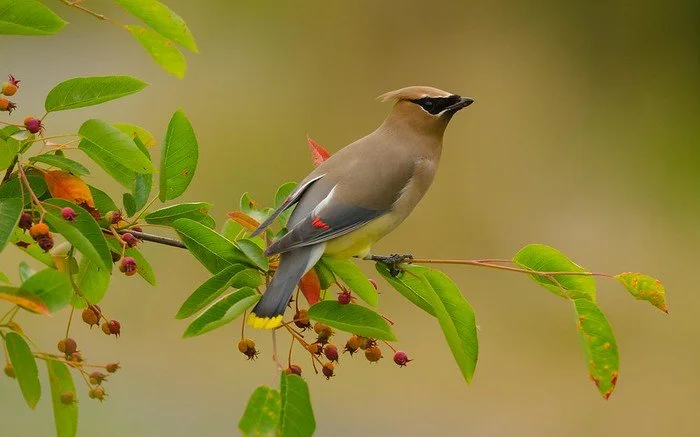
Cedar Waxwing perched about to take flight Source | Jacob McGinnis
In June of 2020 ornithologists Jordan Rutter and Gabriel Foley began the #BirdNamesForBirds movement promoting the renaming of species in an act of harm reduction within the scientific and birding communities.
The goal has been to rename birds who have received honorific or eponymic English common names, often attributed to white scientists or explorers despite many of these species having pre-established names and relationships to the Native people of their region.
Updating these common names, or even returning to regionally traditional names for birds, mountains, and rivers is a necessary step in decolonizing the outdoors, by reflecting the rich histories of each wild place and the people who have been there long before.
In 2023 the American Ornithological Society (AOS) announced their official decision to change all English common bird names within its geographic purview that were named after people, along with all other names deemed offensive and exclusionary. Since then, they have worked with leaders within the ornithology community and the greater public on a major initiative to rename species across North and Central America, and parts of South America alongside regional authorities.
Mirroring the complexities of bird migration, the organizations collaborated across continents, disciplines, and cultures to ensure naming practices aligned with each species' place of origin, as well as its breeding and nonbreeding ranges when it occurs elsewhere.
Looking towards the future, the AOS created a new committee to oversee the naming of new species, as well as regular public forums to continue educating and collaborating with the public. Anyone interested in participating can submit suggestions for discussion, engage in the naming processes, and provide feedback from their own backyards. Projects like this are just one of the many initatives outdoor enthusiasts can join and support.
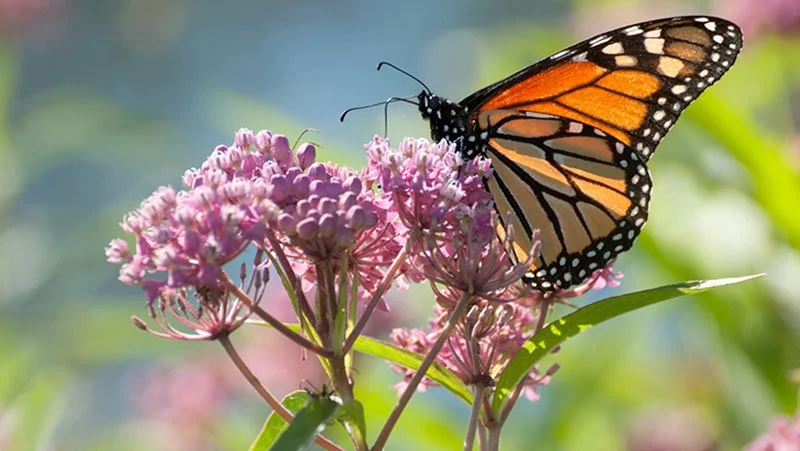
A Monarch relies on Milkweed as their young’s only source of food and shelter during initial phases of life. Source
Like all things, even words change over time. Their meaning, relevance, and utility can transform, fade, or regain purpose as culture, technology, and focus shift across languages. What happens when a word disappears?
In the same way that milkweed is precious to the monarch, as a home and a hearty meal, patterns within our vocabulary hold vital significance to our ideas and understanding of the world. A concept can easily go extinct if our perspectives, histories, and attention cease to make space for the words that define it.
We see this occur in populations of Indigenous people through colonization efforts by European and settler governments. Not only is there a grave loss of culture and language, there is a loss of connection and understanding.
Nearly a century ago, leaf was an essential part of everyday English conversation. Today, it’s not. Many words like computer, climate, and investigate have entered the modern lexicon. We’ve gained words for understanding the world at enormous, collective scales, while losing language for understanding what is immediately around us. The types of words that connect us to place and all foundational materials.
What does the changing vocabulary of a culture reveal about what that culture pays attention to?
Finding common ground in changing times
Jasmine Nackash released a data essay on Pudding, comparing the most common English vocabulary of 100 years ago with today's (1) . This was done using an analysis of The General Service List (GSL), a set of the 2,000 most frequent and useful word families in the English language (2).
While the modern vocabulary list gained words that shape our understanding of technology and globalism, gone were many of the ordinary words that once described our relationship with the physical world: wheat, plow, soap, goat. The word for bread stayed, while the words explaining how we’d grow or make it largely disappeared.
These trends in language suggest a seemingly obvious (and sometimes ominous) social shift away from food sovereignty and gardening; a great loss of ways to describe things we could touch, grow, harvest, or care for–especially in relation to land. At the same time, the changing vocabulary suggests something hopeful: alongside our growing awareness of global systems–climate, environment, identity–is a renewed curiosity about where we belong within them. I believe this is exactly where the outdoors and stewards of these spaces have a lot of wisdom to share.
Names are never neutral
Names hold certain power over how we understand something, and the histories they illuminate. Who gets to name a mountain; why did it receive that name? And, whose languages or relationships with that place have been celebrated, left behind, or left out?
While English common names might make access to nature more approachable for some, it limits our capacity to honor culture, sometimes causing misunderstanding, intolerance, and alienation (even when unintended).
This is why many folks are returning to the name Denali (Koyukon Athabascans for “the high one”), and leaving Mount McKinley behind, despite 2025 executive orders attempting to enforce otherwise. Though federal initiatives can be symbolically important, it’s the everyday backpacker, climber, nature-lover, and mountaineer that makes a difference when they are actively learning and speaking about these beautiful places with respect and historical awareness.
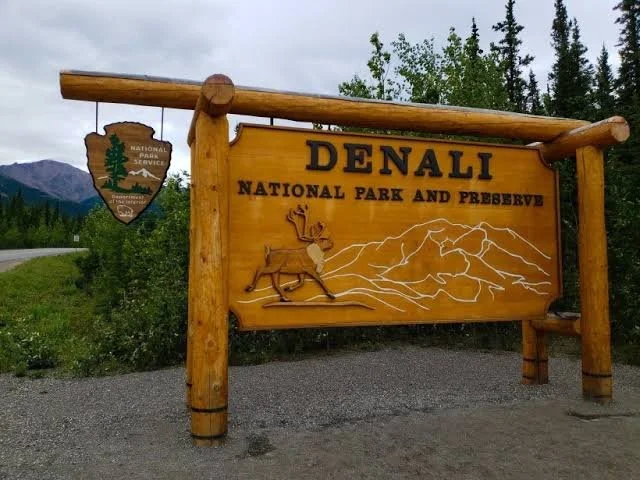
Updated sign for traditional name of Mt Denali. Source
Labels we use can change how we understand ecological relationships
While categories are essential in understanding ecology, it’s important to reflect on the power and limitations of categorization. Words like non-native have significance, but aren’t always emotionally neutral in day-to-day conversation. Even terms like invasive can begin to shift blame of ecological impact away from humans and onto the species in question.
When a scientific classification becomes a story we tell about a living thing, what happens?
Terminology can influence whether we perceive an organism as a nuisance, a threat, an ally, a displaced being, or a member of an ecosystem undergoing change. Life offers a blurrier reality than the words we create to describe things.
This leads to the question: who is telling the story and how does that impact the meaning?
Of course these terms are crucial to understanding ecological impacts, and should continue to be used. However, a well-rounded perspective should acknowledge how an invasive species is introduced, often by human interaction.

Invasive Eucalyptus Trees harm the habitats of Southern California and the recently introduced Eucalyptus Beetle feasts on their leaves with no known native predators, an ecological drama scientists are still looking to understand. Source
Storytelling is another form of stewardship
The practice of oral tradition is a fundamental, sacred, and dynamic system for preserving ancestral history, science, and Indigenous cultural identity for thousands of years. This passes down the values, spiritual beliefs, and knowledge across generations.
While a scientific paper might tell us that a species behaves one way, a story can tell us why we should care. The person who knows the name of a bird, the story behind a mountain, or the seasonal behaviors of a plant provides cohesion, while the listener provides a place for that knowledge to live on.
Storytelling as a technology has a profound impact. Technologies that protect and uplift stories of stewardship offer us a chance at a brighter, diverse, more connected future.
Native engineers and roboticists like Danielle Boyer with SkoBot and many others (3) are creating intentionally designed technologies to support future generations with a new tool for learning their own endangered Indigenous languages (4). In an effort to revitalize and preserve her own people’s language, Anishinaabemowin (Objibwe), Boyer has since brought this personalized, wearable, interactive Indigenous language robot to over 800,000 children through a youth program in collaboration with The STEAM Connection.

Danielle Boyer posing with a Skobot for San Diego Magazine. There are still roughly 150 Native North American languages spoken in the US today by more than 350,000 people. Source
Many of these extinct and endangered languages were lost to federal assimilation and dispossession efforts, government boarding schools, and the loss of elders. This disruption in intergenerational language transmission- the passing of words, ideas, and histories- harms Indigenous communities, but truthfully hurts everyone in some capacity (our wild kin included).
With the fading of these words, we see the loss of concepts that connect us to the world around us, rather than separating humankind from place. Words like “nature” and “wild” have no place outside of Western concepts of the environment. In a way, these words help us view nature as separate from us. Language like this is few-to-none in Indigenous vocabulary around the world. Elements of the environment like rivers, mountains, trees are spoken of as ancestors, relatives, and sovereign beings. This nuanced perspective creates clarity around our mutual obligation, or guardianship, of wild places and the lives that sustain them.
Our ability to form language matters even more today
Even if you are new to the outdoors, or new to these concepts on decolonizing language, there are many ways you can already show up and make a positive impact. This can look like creating opportunities to reflect, learn, and listen: What words can you avoid to create a more inclusive outdoors? What words can you use more to stay connected to nature?
At a time when ai-generated content has begun saturating so much of the art and text we read, we have an opportunity to reclaim our conversations and prioritize understanding.
Beyond the environmentally problematic aspects of ai, the social impact is equally questionable. This isn’t to say ai is inherently bad, but if misused, this technology can encourage us to detach from language arts, and lose irreplaceable tools and talents.
With language, humans have the ability to listen, interpret, question, contextualize, understand, and imagine alternatives. These precious traits are worth holding onto, despite how tempting it could be to automate your emails or essays. If language were considered a tool, a curious mind would be the carpenter. Continuing to utilize these tools of the mind is one of the immediate ways we can prevent the loss of language, and most importantly our ability to understand one another.
Connection, self-expression, and global impact are trending, and what better a time to reimagine how we connect to our origins.
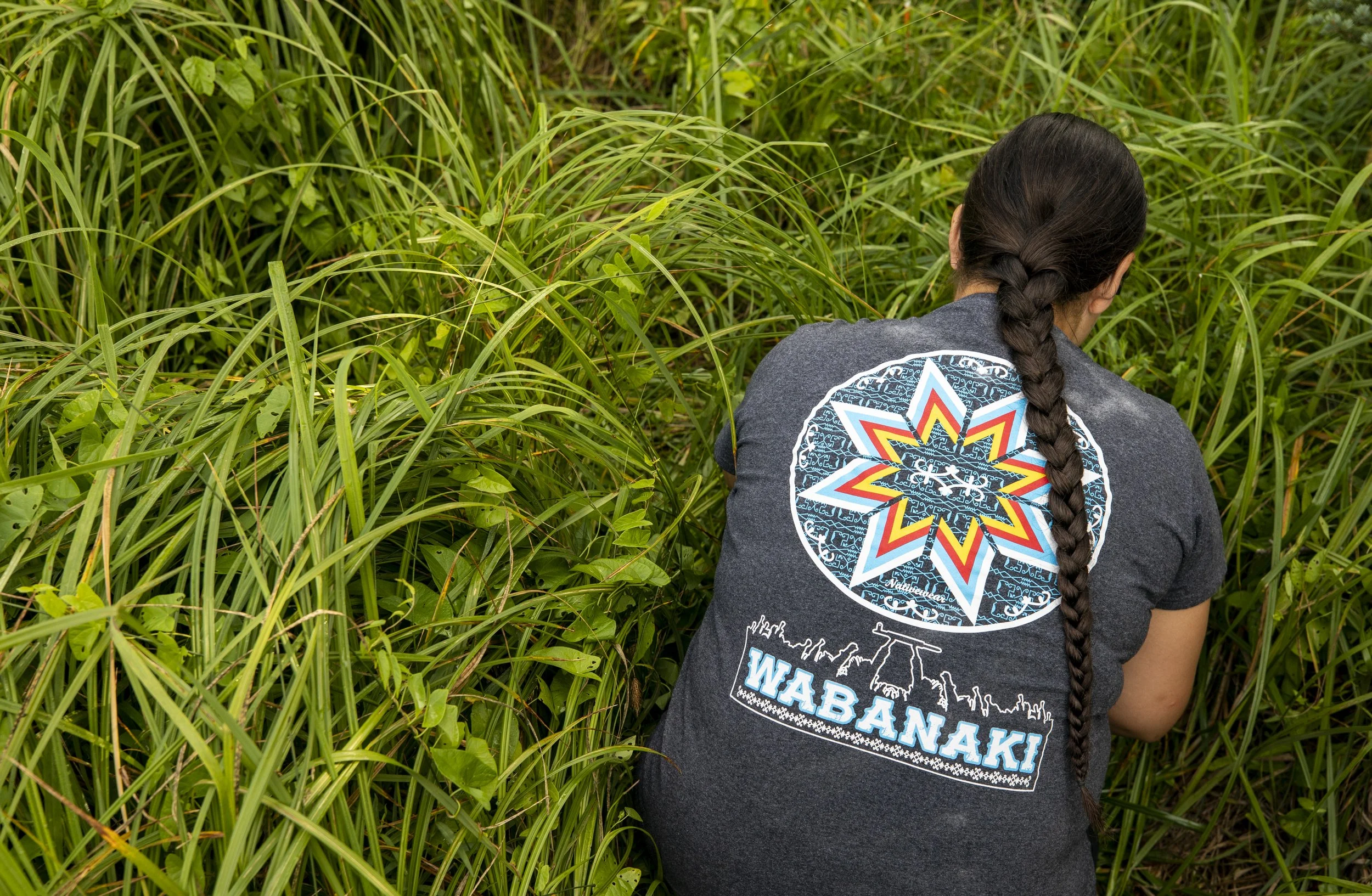
Image of sweetgrass harvest in Acadia Maine. In 2024 the National Parks Service changed regulations to allow five Wabanaki tribes in Maine to resume traditional sweetgrass gathering for the first time since the park’s creation in 1916, acknowledging the necessary practice of gathering for ecological stability thanks to the many people who spoke up about it. Source
Putting it all to practice
Outdoor advocacy can take many forms, and how we communicate or connect are at the center of this practice. There’s no surprise–the people yearn for community and global accountability. But today, before we can move mountains, we must have conversations, and more so, we must listen.
We do this by centering and uplifting Indigenous voices and histories, many of which teach the origins of stewarding. We respond to these lessons by decolonizing our science and language to tell more authentic and inclusive stories. We use the original names and honor multi-generational knowledge of the land, which reminds us that relationships are often the first step in stewardship.
Resilient futures do not require more technology or immediacy, but rather it requires people capable of listening across differences; remembering what came before; dreaming together of what comes next, and finding the words for the living world that bring us together instead of separate us.
Building a future beyond our wildest dreams begins with learning how to name the world again, and remaining curious enough to keep listening.
Footnotes and Resources
Acknowledgement: While this article focuses mostly on the English language, it should be recognized that there are many people around the world creating equity in the outdoors, and that this work absolutely requires creating opportunities and accessibility in non-English languages.
The GSL was created in the 1953’s, intended to support people learning English as a second language, and was a quick-reference guide for everyday conversation. The list was later updated in 1995 as the New General Service List (NGSL), and again in 2013 to adapt to changing times. The original list covered roughly 84% of general English used at the time it was created. Though the GSL/NGSL have limitations in both size and nuance, it provides insight to a fascinating trend illuminated in Nachash’s essay.
Additional Resources: other brilliant minds like Delaney Lothian, creator of Sound Hunters, and Dr. Jacqueline “Lina” Brixey of Masheli are paving a way towards supporting Indigenous language learning.
The Indigenous Language Institute states, there were once more than 300 Indigenous languages spoken in the United States, with approximately 175 remaining today. It is estimated that without restoration efforts, there will be at most 20 still spoken by 2050 (source).
Discover More
Checkout the Oathology Microactivity to dive deeper.
